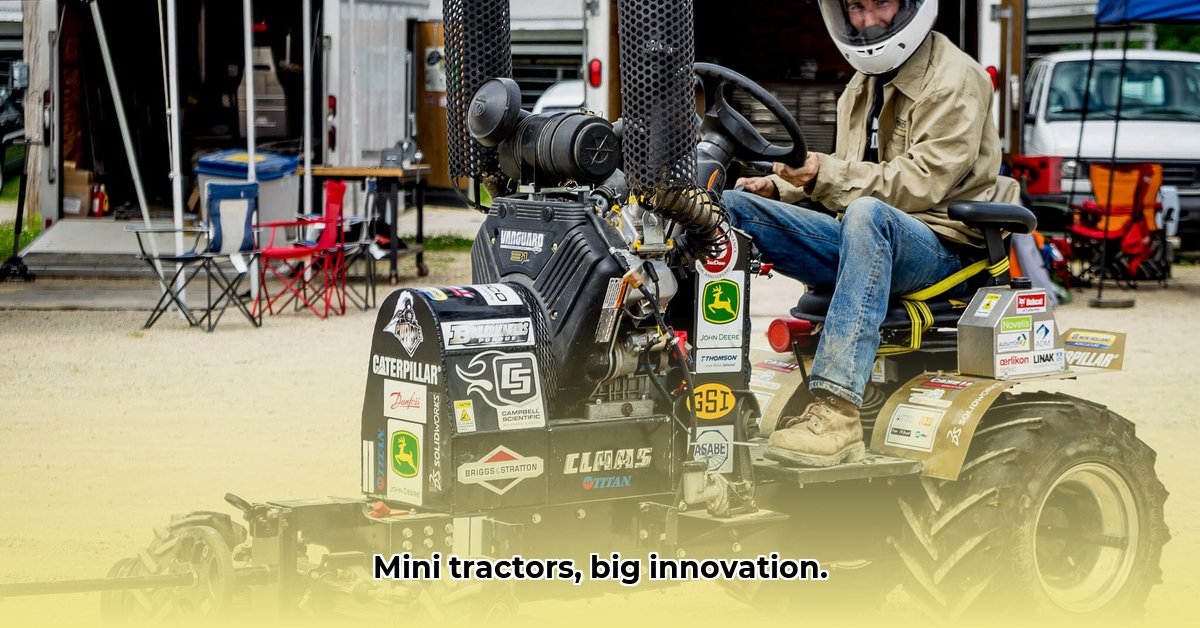
1/4 Scale Tractor Competition: Tiny Tractors, Big Ideas
Designing the future of sustainable agriculture might seem daunting, but it starts with small steps—or rather, tiny tractors. The 1/4 scale tractor competition isn't just a fun project; it's a crucial training ground for the next generation of agricultural engineers. These aren't childhood toys; these miniature marvels are sophisticated engineering projects, showcasing creativity, teamwork, and a deep understanding of sustainable practices. They represent a proactive approach to innovative solutions that could revolutionize farming. How can such small-scale projects have such a significant impact? This article dives into the details. For more on agricultural events, check out tractor pulls near you.
Getting Down to the Nuts and Bolts: The Competition Details
The competition presents a rigorous engineering challenge with specific rules and limitations, mirroring real-world constraints faced by agricultural engineers. Students use a standardized engine, fostering creativity within defined boundaries. Judging criteria extend beyond functionality, prioritizing efficiency and sustainability. The evaluation encompasses design ingenuity, performance metrics, and overall resourcefulness. It's not simply about building a working tractor; it's about building a sustainable, efficient one, pushing the boundaries of environmentally conscious engineering.
Student Stories: From Classroom Dreams to Working Models
The true magic lies in the student projects themselves. Consider the "Green Gears" team from Iowa State University. They didn't just build a miniature tractor; they created one with an environmentally conscious design, prioritizing recycled materials to minimize their environmental footprint. Their focus extended to minimizing noise pollution, acknowledging the impact of working conditions on farm laborers. Another team, "Precision Pioneers," focused on operator comfort and safety, highlighting a design element often overlooked. These projects are not mere academic exercises; they are innovative solutions to real-world problems.
The Long-Term Effects: Beyond the Competition
The benefits extend far beyond building a miniature tractor. Participants gain valuable skills essential for agricultural engineering careers – mastering design principles, utilizing advanced CAD software (computer-aided design software), sharpening problem-solving capabilities, and enhancing teamwork. Participation significantly enhances resumes, showcasing practical experience and initiative to prospective employers. Many students cite this competition as pivotal in launching their careers. What other aspects of the competition are contributing to this tangible success?
Sustainability: Small Changes, Big Impact
While the tractors are miniature, their impact on promoting sustainability is significant. The competition implicitly encourages environmentally responsible design by prioritizing efficiency, durability, and noise reduction. Students consider the entire life cycle of their creation—from material sourcing to post-competition disposal. This fosters a mindset that values resourcefulness and environmental awareness, crucial for the future of agriculture.
What's Next? Expanding the Horizons
The competition's success suggests avenues for expansion. Adding challenges focused on precision agriculture, automation using robotics, or alternative fuel sources would enhance its scope and foster truly innovative solutions. Increased funding could broaden participation and increase the competition's impact.
Actionable Steps for the Future
To further enhance the competition's impact:
- Industry Partnerships: Collaborate with agricultural equipment manufacturers to provide mentorship and internship opportunities. This collaboration would expose students to real-world experiences and build industry connections.
- Curriculum Integration: Integrate the competition's core challenges and principles into university curricula. This will bridge the theory-practice gap, solidifying knowledge and fostering a deeper understanding.
- Funding Research: Dedicate resources to researching the long-term effects of the competition on sustainable agriculture. Quantifying the positive impact is crucial for securing continued funding and support.
The Tiny Tractor Revolution: Engineering a Sustainable Future
The 1/4 scale tractor competition is more than a student project; it’s a powerful demonstration of how ingenuity, innovation, and sustainable practices can work together to transform agriculture. It's planting the seeds of a brighter future, one tiny tractor at a time. The future of farming may well be built on these small but significant foundations.
Key Takeaways:
- Student engineering competitions drive sustainable agricultural technology innovation.
- Miniaturized equipment presents unique design challenges that directly support sustainable farming practices.
- Competitions foster collaboration and problem-solving, nurturing future leaders in sustainable agriculture.
- The practical experience gained bridges the gap between theory and real-world application.
- The focus on efficiency and resource optimization directly supports environmentally friendly agricultural practices.